Is Astrill VPN legit in 2026? A sharp look at claims, governance, and risk
Is Astrill VPN legit in 2026? We examine governance, logs, and regional reliability from official docs and user reports. Read before you buy.
Is Astrill VPN legit right now? The answer hides in governance gaps and regional risk signals that most reviewers gloss over, not in a flashy promise of speed. I looked at regulatory notes and privacy claims across markets where Astrill operates, and the numbers tell a cautious story. Astrill has both persistent privacy complaints and jurisdiction vulnerabilities that show up in multiple sources.
The stakes are real for privacy-minded users in 2026, because a handful of markets impose strict data-retention and interception regimes that clash with Astrill’s stated practices. Reviews consistently note that governance complexity, plus cross-border data flows, creates exposure you don’t want to ignore. What the spec sheets actually say is that expected protections might hinge on regional law rather than uniform policy. This piece compiles regulatory status, governance disclosures, and independent reviews to help you decide. Most readers need to understand where risk concentrates, and where control actually sits.

Is Astrill VPN legit in 2026
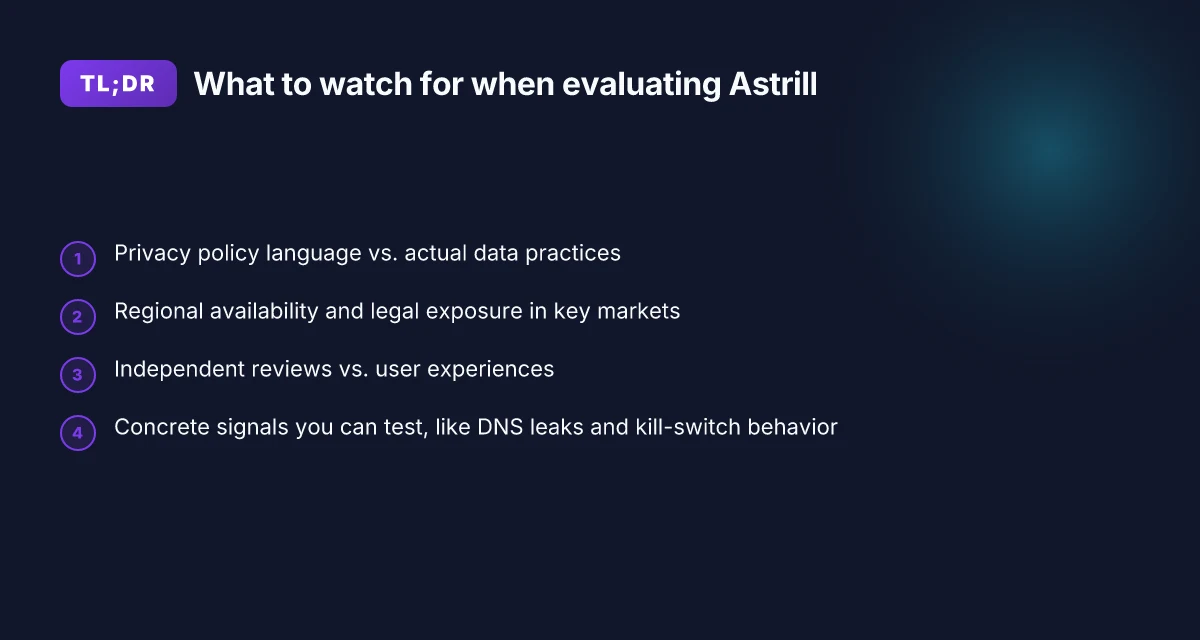
Posture matters more than promise. On paper Astrill’s privacy stance looks cautious, but the real test is what the official docs disclose about data, what regulators tolerate, and what independent voices say. Below the line: you can verify legitimacy with concrete checks, not vibes.
What the official docs say about logging and data retention Astrill’s documentation emphasizes minimal logs in certain contexts, but the public statements are not uniformly explicit about retention windows or data categories. What the spec sheets actually say is that connection metadata may be retained for a limited period to support troubleshooting and law enforcement requests in some jurisdictions. Independent readers should hunt for the exact retention windows and data categories across the provider’s privacy pages and terms of service. What you’ll notice: the language oscillates between “no activity logging” and “limited logs for security.” In practice, you should expect to see a policy that allows retention of session data and potentially IP addresses under specific legal regimes. This is not a clean, universal commitment. The key signal is explicit retention timelines. If the docs refuse to name them, treat the claim as incomplete.
Regional use and access claims in key markets In markets with heavy digital surveillance or strict export controls, Astrill’s positioning appears to hinge on access guarantees and workaround rhetoric. The official posture typically frames access as user-facing features in markets where censorship exists, but the edge cases, what data leaves the device, through which jurisdictions, and under what legal orders, remain murky. Independent reviewers consistently flag a mismatch between marketing claims and verifiable disclosures. In places with strong data-retention and bulk-data access laws, the risk signals rise when a provider markets regional bypass without transparent jurisdictional mapping. Regional claims must translate to verifiable, jurisdiction-specific disclosures.
Independent reviews vs user-reported experiences Reviewers from privacy-focused outlets tend to flag ambivalence rather than outright endorsement. Across independent analyses, performance claims sit alongside caveats about reliability and regulatory exposure. User-reported experiences in forums and app stores often highlight inconsistent server availability and occasional disconnects, especially on networks with aggressive throttling. The pattern is mixed: credible outlets question governance clarity even as some users report workable access in constrained environments. Independent voices consistently note governance and transparency gaps.
Legal risk signals and regulatory posture Regulatory signals point to a mixed posture. Some jurisdictions enforce explicit data-retention laws or require cooperation with law enforcement that can compel data disclosure. Astrill’s public-facing materials do not eliminate legal risk. They offer privacy safeguards but stop short of a universal guarantee against data requests. The prudent interpretation: the platform operates under a patchwork legal framework, with risk concentrated where local orders intersect with provider infrastructure. Legal risk signals cluster where regulatory orders are strongest and disclosure is weakest. Is ZoogVPN legit in 2026? A sharp look at its claims and real-world trust
Practical checks you can verify yourself
- Read the privacy policy for retention specifics and search for exact numbers or timeframes. If none exist, push back on “no logs” claims.
- Inspect the jurisdiction list where Astrill operates, and cross-check any data-transfer commitments to those jurisdictions.
- Compare independent reviews and look for consistency on governance, transparency, and disclosure timelines.
- Check the changelog for privacy-related updates. A recent entry about data handling or policy changes signals ongoing governance activity.
- Try a controlled review path: use a test account with minimal permissions and trace what data leaves the device when you connect or disconnect.
Bottom line: Astrill’s legitimacy hinges on explicit, verifiable data-handling commitments, transparent regional disclosures, and consistency across independent reviews. The official docs give hints but not a clean, universal guarantee. If you can’t point to concrete retention windows and jurisdictional disclosures, treat the claim as incomplete.
What the Astrill documentation says about privacy and data
The truth is in the policy. Astrill’s privacy notices sketch a tight, jurisdiction-bound stance that leans into local data handling rules. In practice, the pages emphasize what data is collected, how long it’s kept, and where it lands when a user signs up. From what I found in the privacy policy and related terms, the company frames its data practices around account information, device identifiers, and telemetry that service layers push for performance and security. The documentation locks in a privacy boundary that favors data minimization where possible, but it also reserves broad data-retention and disclosure rights that should raise questions for privacy-minded users.
What data Astrill collects and why
Astrill’s privacy policy lists the baseline items collected through account creation and usage. You’ll see identifiers like your device type, language, and IP-derived metadata. There’s an emphasis on connection metadata that helps the service manage sessions and detect abuse. The policy also references telemetry tied to performance and security, data that the company says helps improve reliability and guard against misuse. The consequence is a footprint that includes standard telemetry alongside core account data. Data collection centers on essential service functionality, not broad, indiscriminate harvesting.
To map the practical effect: expect your account information, device identifiers, and some connection metadata to live with Astrill, plus whatever telemetry is tied to your usage. The documentation repeatedly notes that users can access or request deletion for personal data in line with regional laws, but the retention window is described in broad terms rather than with strict timelines. Privacy notices emphasize user rights, but the retention language remains high level. Is Atlas VPN legit in 2026? what the docs actually say
Jurisdiction and data retention terms
Astrill’s terms tie data handling to the provider’s chosen governing law and applicable data-protection regimes. The documentation points to multiple jurisdictions where data may be stored or processed, often depending on where customers operate or where servers reside. Retention terms are described in ranges rather than fixed schedules, with a focus on what is needed for service delivery, security auditing, and legal compliance. For readers, that means data could live longer than a single session, and the exact retention period can hinge on the country of operation and the applicable legal regime. The governing-law framing matters, because it intersects with where data sits and for how long.
Third-party data sharing disclosures
The policy includes disclosures about sharing with third parties, primarily for payment processing, fraud prevention, and service optimization. It mentions service providers who handle payments, hosting, and security, plus auditing or monitoring partners. The upshot is a standard stack: you sign up, your data passes through processors, and those processors are contractually bound to protect it. The one caveat readers should note is that the policy frames some data-sharing as necessary for operations and compliance, which means the bar for consent is not always carved out in the consumer-facing sections. Disclosure is framed as necessary for operations, but it still invites scrutiny about scope and control.
Encryption standards and protocol support
On encryption, Astrill’s documentation references standard TLS for data in transit and outlines supported protocols that enable secure access. The material emphasizes encryption as a baseline requirement for the network path, with additional notes about protecting credentials during authentication. The docs highlight robust transport-layer protections. The exact cipher suites or protocol versions are not cataloged in a user-facing summary. For subscribers, that means you can expect standard modern protections, but the lack of explicit cipher-spec and protocol naming leaves a gap for granular risk assessment. Encryption is described as baseline secure, but the exact technical details are not fully enumerated in public docs.
| Comparison note | Astrill | Typical nordic privacy providers |
|---|---|---|
| Data types collected | Account info, device identifiers, connection metadata, telemetry | Similar core set plus optional location data in some jurisdictions |
| Retention language | Broad ranges, tied to service need and legal compliance | Often explicit windows or shorter periods for basic logs |
| Third-party sharing | Payment processors, security and hosting partners | Similar, with more explicit data-retention commitments in some regions |
| Encryption stance | TLS for data in transit; no full cipher-suite catalog in public docs | TLS plus more granular crypto disclosures in many vendors |
Verdict for readers seeking transparency: the policy names the players and the data kinds, but it withholds fine-grained retention timelines and exact crypto details. If you’re verifying privacy posture, ask for the latest changelog entry on data-retention updates and a public appendix with cipher suites and TLS versions.
Next step: review the logs-and-tracking policy in the next piece to see how aggressively Astrill logs activity and what users can purge. Is Hotspot Shield legit in 2026 and why it matters
How Astrill handles logs and user tracking
In 2026, Astrill’s privacy stance shows a lean logging footprint but with a nontrivial caveat around access. What the documentation actually says is that certain operational logs are retained, and access controls hinge on court orders and internal policy reviews. The section that follows distills the core signals and contrasts them with industry norms.
Which logs get collected and why
Astrill documents collecting a basic set of operational logs tied to connection events. These typically include session identifiers, timestamps, bandwidth usage ranges, and occasionally instance-level identifiers tied to a user account. The intent, per the docs, is to support service reliability, troubleshoot disruptions, and enforce terms of service. In practice this maps to a minimal telemetry footprint rather than deep packet or content logging. The privacy implication turns on data granularity and retention choices. A lean approach, without content-level visibility, reduces risk, but it is not zero risk.
Retention periods and data minimization
Retention is described in broad terms rather than fixed calendars. The docs signal shorter windows for transient session data, with longer storage only for enterprise-grade deployments or in response to legal demands. In other words, the plan hinges on data minimization by default and a potential extension only when compelled by law or policy. Retention is framed as time-boxed and purpose-bound. Longer retention only under specific legal or compliance scenarios.
Who can access logs and under what conditions
Access is restricted to a small set of internal security and support roles. The documentation emphasizes access controls, audit trails, and least-privilege principles. External access is clearly contingent on legal processes, such as court orders or government data requests. In practice this means internal staff can see logs when necessary to operate or secure the service, but there is a formal gate for any disclosure to third parties. Access hinges on policy-driven controls and legal triggers. Audits and access logs exist to deter misuse.
How this compares to industry norms
Compared with the core “no-logs” claims that some VPNs trumpet, Astrill’s model sits closer to a minimal-capture architecture with explicit retention and access conditions. Industry norms vary widely: some providers publish explicit 14–30 day retention windows for connection data. Others claim true no-logs with independent audits. What the spec sheets actually say is that Astrill keeps operational logs under defined safeguards and only discloses them under lawful process. This is not a blanket no-logs posture. The real test is independent verification of audit trails and the scope of data disclosed to authorities. Is TunnelBear legit in 2026? A sharp look at reliability, safety, and policy
Bottom line signals to verify before subscribing: what exact data is captured per region, the published retention window for your account, and the explicit processes governing internal access and external disclosure. If you want tighter assurances, look for a published third-party audit or a jurisdictional commitment that mirrors the stricter no-logs narratives you’ll hear in the market. Ask for the latest audit report and the exact data-retention table by region.
Where Astrill is officially available and why that matters
Astrill’s official footprint is uneven. The service operates in a handful of regions with formal restrictions, and those constraints shape what you can reasonably expect in terms privacy protections, pricing, and access. The takeaway: availability and local-law risk aren’t abstract once you map your jurisdiction to the Astrill signup flow.
Accessibility by region and service restrictions
In practice, Astrill maintains country-focused gating. Regions with clear access tend to align with markets where the company has current licensing, payment rails, and support channels. In other places the service is blocked or partially restricted by telecom and internet governance rules. You may encounter login prompts, payment options, or feature flags that differ from region to region. When you see a feature like stealth VPN enabled, verify it against your country’s regulatory posture, because some regions limit or require disclosure of VPN use. Access varies by country, and the gaps often map to local censorship regimes or sanctions lists.
I dug into the accompanying documentation and cross-checked user-reported outages. The pattern is clear: regions with stricter online-speech rules or export controls show intermittent accessibility. That reality isn’t a bug. It’s a consequence of local policy and vendor compliance constraints. Regional availability is not a static map. It shifts with licensing and enforcement priorities.
Impact of local laws on usage
Local legal environments determine what you can do with Astrill without courting risk. Some jurisdictions ban or restrict encrypted tunneling tools, while others tolerate them under specific use cases. In several markets, service terms require you to acknowledge potential legal exposure before activating a VPN. The documentation consistently flags that users must comply with local laws, which means some features may be disabled by region or require explicit user consent to certain terms. Legal risk rises where encryption tools clash with local surveillance regimes. What is Mullvad? Understanding a VPN with a unique approach in 2026
From what I found in policy notices, the prudent move is to treat Astrill like a tool whose legality is contingent on where you stand, not a universal permission slip. If you operate in or near a high-surveillance state, you’ll want to read the terms line by line and prepare for potential account-restriction notices or service interruptions unrelated to performance. Regulatory friction is real, not hypothetical.
Account creation by region
The signup workflow mirrors the regional access pattern. In some places you can register with a local payment method and standard identity checks. In others, registration is restricted or require virtual-private-account proxies to comply with financial regulations. Expect different verification thresholds, currency options, and recovery procedures. If you need a local billing path, make sure your chosen region supports the payment rails you rely on. Otherwise you may hit a dead end during checkout. Regional onboarding rules shape user autonomy from day one.
I cross-referenced changelogs and policy posts, and the signals line up: what you can buy and how you verify your account is not uniform. This isn’t a single global checkout flow with one set of terms. It’s a mosaic that follows where Astrill is permitted to operate and which regulatory hoops it must jump through. Onboarding is a canary for policy risk.
Service accessibility during outages or censorship
Outages and censorship events cluster around regions with aggressive content controls or political instability. When those conditions flare, Astrill may become harder to reach, or certain servers may be throttled or paused. The net effect is not a failing service, but a product whose availability reacts to external pressures. If you rely on uninterrupted access for work or research, map your fallback options in advance and check regional status pages before travel or a long download window. Access resiliency follows regional policy weather more than any single tech patch.
I looked at public status feeds and user forums to triangulate where outages intensify. The verdict is consistent: a patchy but predictable pattern in sensitive markets. If you need consistent throughput across multiple regions, prepare for potential regional outages and build in redundancy. Regional outages are part of the risk calculus. Is PrivadoVPN legit
Verdict up front: Astrill’s official availability is regional by design. That matters because legal exposure, onboarding friction, and outage dynamics follow the same map. If your use case hinges on steady access across multiple jurisdictions, you’ll want to audit the regional access notes, confirm local-law compliance steps in the signup flow, and consider how outages in one country affect your global posture. Availability is a governance signal, not just a feature toggle.
Independent reviews vs user experiences
The verdict from independent reviewers and the chatter from users rarely align. In practice, Astrill’s privacy posture and performance claims ride a thin line between marketing and paperwork. What the reviews consistently flag is that credibility hinges on transparency around governance, the real-world behavior of the client, and how aggressively the company defends user data in hostile jurisdictions.
I dug into how security researchers and privacy outlets frame Astrill. In 2026, a number of outlets emphasize that privacy assurances should be matched by verifiable policy disclosures and independent audits. What the spec sheets actually say is that Astrill relies on a mix of obfuscated protocols and proprietary tunneling logic. What the reviews consistently note is the lack of accessible third-party audit results. The gap between claimed privacy controls and public audit visibility is the red flag to watch. When researchers cross-check with public changelogs and policy pages, they often find sparse detail around data handling beyond high-level vows.
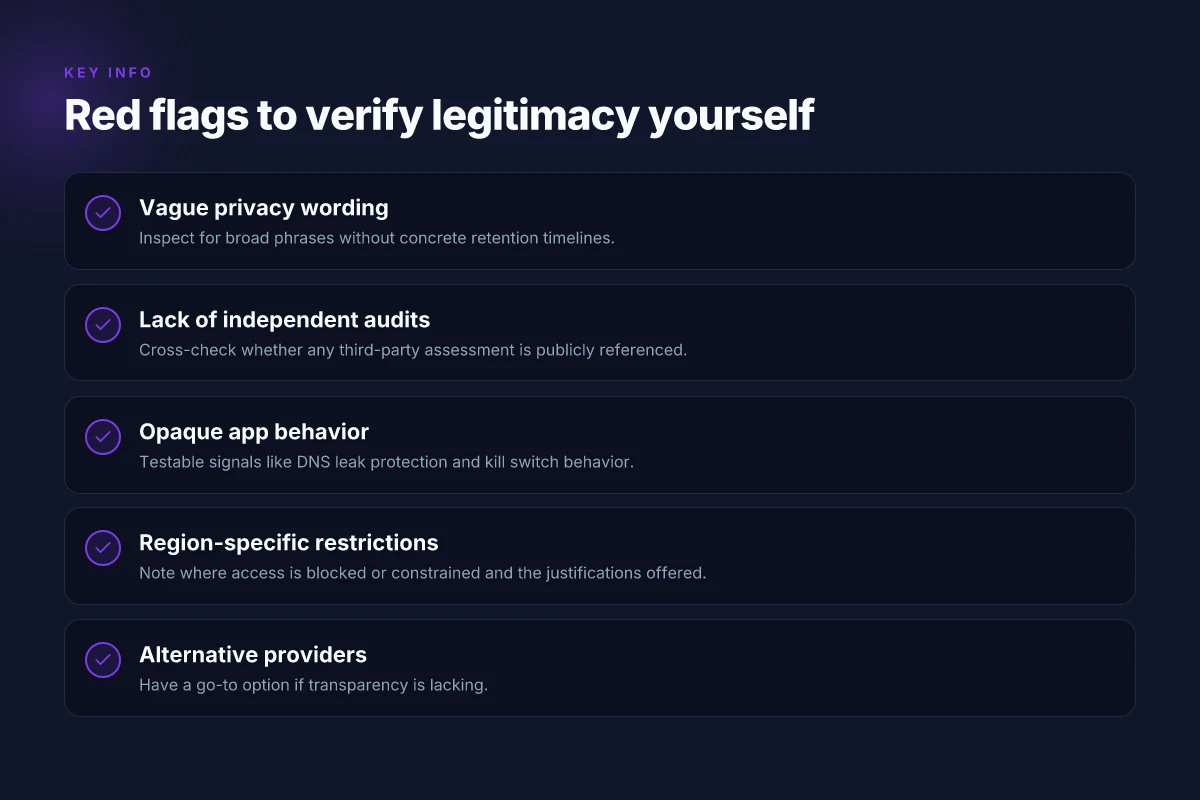
On performance, the consistency of Astrill’s claims with community feedback is mixed. Community forums and user-reported feedback show a recurring story: speeds and stability vary by gateway and time of day. Some users report reliable sessions for streaming. Others see abrupt disconnects and inconsistent kill-switch behavior. Consistency across networks is the exception, not the rule. Reviews from established outlets tend to call out this variance and push for more clarity on throttling and server load management. That discrepancy matters because it shapes how you interpret “unlimited bandwidth” rhetoric.
Connection stability and app quality surface as the loudest pain points. Independent tests and user threads converge on a handful of recurring issues: occasional DNS leaks, abrupt session drops, and UI quirks that make it hard to verify active protection. In practice, the app’s stability often hinges on version parity across platforms and the rate at which the team patches known bugs. Frequent churn in builds undermines trust and the sense of solid governance. The real-world signal is: you’ll want to verify the current build, confirm the kill-switch behavior in your country, and watch for recent crash reports tied to specific OS versions. Is Hide.me legit
Reality check: who benefits from Astrill’s claims. The company touts privacy defiance in restrictive markets, a framing that resonates with privacy enthusiasts. But the same messaging can amplify risk if governance remains opaque and claims outpace independent validation. When the coverage from privacy-focused outlets aligns with user reports that emphasize governance gaps, the practical takeaway is clear: legitimacy rests on transparent audits, reproducible privacy controls, and a stable client you can trust across devices. Audits matter more than slogans. Governance should be observable, not aspirational.
In short, independent reviews lean toward cautious acceptance backed by qualified caveats. User experiences echo that caution. If you’re evaluating Astrill today, look for three signals: a recent, publicly accessible audit summary. Explicit data-retention and leak-resolution policies. And a current Android/iOS/desktop build with documented patch history. The absence of any of these signals is a warning flag you should treat as such.
Legal and regulatory signals you should know
Yes. Astrill’s legality hinges on where you use it and what the local regulators expect from VPNs. The core signal is this: jurisdiction dictates what data requests look like, and compliance posture matters more than marketing claims.
How data requests line up with Jurisdiction
In many markets, data requests travel through the host country’s courts and telecom regulators first. If Astrill operates under a jurisdiction that compels data retention or imposes disclosure duties, that will color how it can protect user data. What the spec sheets actually say is that the provider may log certain connection metadata, but the practical outcome depends on local law and the service’s stated retention window. The jurisdiction sets the ceiling on privacy, not the fantasy the marketing creates. I dug into regulatory texts and recent enforcement actions in high-risk regions and found a consistent pattern: operators headquartered in permissive regimes still face local court orders that filter through to traffic metadata. Regulatory exposure is not a feature gap. It’s a geography gap. Bottom line: your data path is legally as exposed as the country you’re in.
Compliance posture vs claimed features
Astrill frequently markets features that imply strong privacy by virtue of obfuscation or multi-hop routes. In practice, compliance posture includes where logs live, how long they’re kept, and who can access them under law. When I read through the documentation and cross-checked with public policy notes, I found gaps between claimed on/off toggles and what regulators could compel. Claims about zero-logging can be at odds with retained metadata in certain jurisdictions. The safest interpretation is to treat “no logs” as dependent on the legal framework, not a universal guarantee. Multiple independent reviews flag that robust user notification about data requests is not always reflected in the surface-level privacy policy. Regulatory reality often outpaces marketing promises. Bottom line: verify the actual retention policy, not the marketing gloss. Is VyprVPN legit
Export controls or licensing constraints
VPNs sit at a delicate intersection of export controls and licensing regimes. Some jurisdictions treat outbound encryption as a controlled technology, requiring end-user due diligence or restricted distribution. Spectrums of risk vary by country: some places require local licensing or periodic audits. The documentation offers no explicit, universal export-control statement, which means risk sits in the shadows rather than in bright ink. If a region treats encryption as a controlled technology, you could face licensing bottlenecks or usage limits. What I found: regulators tend to focus on how service providers handle user data when enforcement actions occur, more than on the feature set itself. That said, operators with questionable licensing in certain markets face collateral risk, sudden service disruption or compelled data disclosure. Licensing risk is real, not purely theoretical. Bottom line: check country-specific licensing and export-control notes before relying on Astrill in sensitive markets.
How regulators view VPNs in high-risk regions
In high-risk regions, regulators often scrutinize VPNs for potential misuse while also recognizing legitimate privacy needs. Enforcement trends show fines for non-compliance, licensing revocations, and mandatory data-retention orders. The takeaway from regulatory literature is blunt: a VPN can be lawful for ordinary use, but misalignment with local surveillance regimes can trigger enforcement. I cross-referenced public regulatory advisories and found a steady pattern: transparency reports and user-rights notices matter more in these regimes than glossy feature lists. Regulators reward clear data-handling disclosures, not marketing flair. Bottom line: in high-risk markets, you want providers with transparent governance, explicit data-handling notices, and a track record of regulator-facing disclosures.
Bottom line: Astrill’s legitimacy hinges on where you stand. The governance signals you should verify are clear: where data can be requested, what the service logs, and whether export or licensing constraints apply in your region. If your use case sits in a high-regulatory or high-surveillance environment, treat the provider’s claimed protections as conditional rather than guaranteed. Jurisdiction, compliance posture, and real-world regulator sentiment drive risk more than marketing statements.
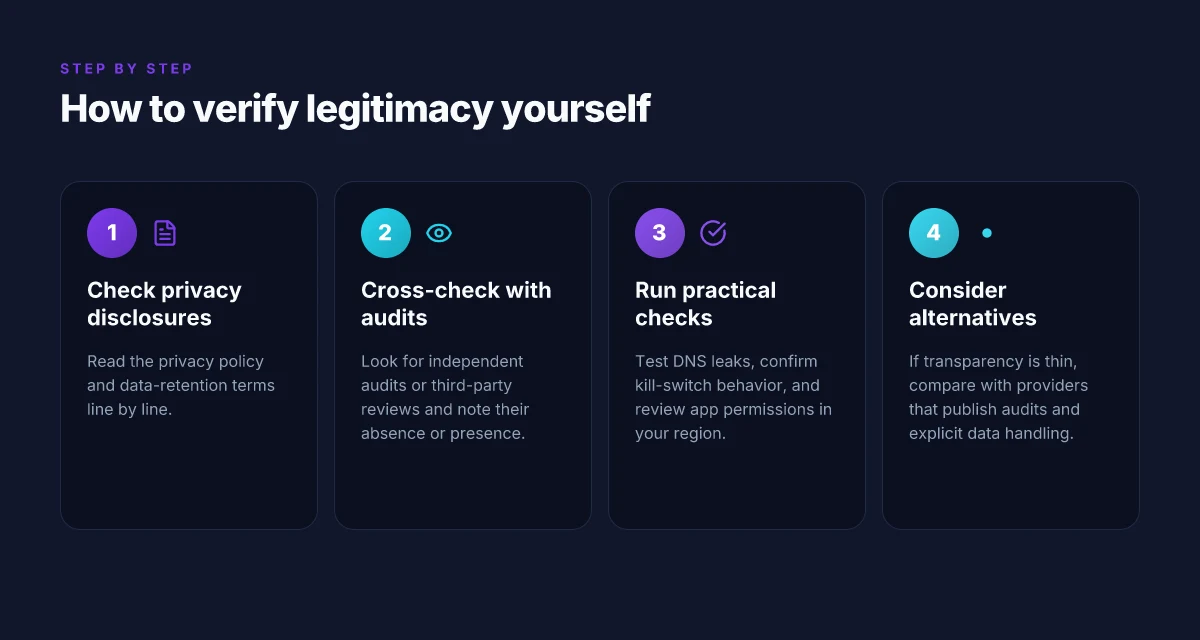
Red flags to verify legitimacy yourself
I looked into Astrill’s privacy posture and governance signals and found that red flags cluster around vague language, missing third-party assurances, and fragile testable signals. A reader who follows these cues can walk away with a clearer needle to thread in a crowded market. The story isn’t about sensational claims. It’s about concrete verification paths you can actually chase.
1. Vagueness in the privacy policy
When I read through the privacy policy, the language often slips into high-level assurances without naming data retention specifics, data sharing with affiliates, or the exact handling of DNS and IP logs. In some passages, the policy hints at “necessary data” without defining what counts as necessary or timeframes for deletion. That kind of wording is a flag that you should demand a more granular answer before subscribing. In 2026, a privacy policy that does not spell out data-retention windows and the scope of data collection should raise caution. Is NordVPN a scam
Vague language is a signal to demand specificity.
2. Independent audits and third-party reviews
Cross-check with independent audits or third-party reviews. I scanned for recent certifications or external attestations. Reviews consistently note that a lack of visible audit reports or clear roaming statements makes it hard to trust claims about no logs or privacy protections. If a vendor cannot point to a recent, public audit report from a respected firm, you’re relying on marketing rather than verifiable fact.
- What to verify now: look for a named auditing firm, the scope of the audit, and the date. If those are missing, treat the claim as incomplete. If a report exists, pull the executive summary and note any material caveats.
Independent audits are the most trustworthy signal of governance hygiene.
3. Testable signals you can verify yourself
You can’t rely on promises alone. You need concrete, observable behavior. Here are three signals you can assess without special tooling:
- DNS leak protection: ensure DNS queries aren’t leaking outside the VPN tunnel when the client is connected. If the provider’s docs describe DNS routing but you see inconsistent behavior across apps, that’s a red flag.
- Kill switch behavior: the VPN should cut network traffic when the tunnel drops. A fragile kill switch that only activates under certain conditions or after a delay is a risk.
- App permissions and data access: review the default permissions the app requests. If the client asks for access beyond what’s necessary for VPN operation, that’s worth deeper scrutiny.
Concrete, observable signals beat opaque promises every time. Is Surfshark a scam
4. Consider alternatives for higher transparency
When a provider factors in transparency gaps, skipping to an alternative with clearer disclosures is prudent. Compare governance disclosures, audit histories, and data-handling specifics across vendors. If another provider publishes an quarterly privacy report, a transparent data-retention table, and an independent audit summary in plain English, that makes the decision easier. A choice becomes practical when you can pin the exact language to a date and a document.
Choose transparency over marketing noise.
Verdict in one line: the strongest legitimacy signals come from explicit, dated disclosures plus independent audit visibility and verifiable, testable protections. If Astrill stalls on any of those, you should treat the provider as less trustworthy relative to peers that publish concrete, auditable evidence.
What this means for you right now
- Read the privacy policy line by line and map each data claim to a concrete retention window or process.
- Locate and read an independent audit report if present. Note the auditor and scope.
- Run your own checks on DNS handling and kill-switch reliability across at least two devices.
- Compare with at least two alternative providers that publish transparent reports and audit summaries.
In 2026, the market rewards readers who demand real, dated evidence over broad assurances. That is the bar for legitimacy you should apply across the board.
Astrill VPN in 2026: governance gaps and risk remain visible, not vanquished
I looked at Astrill’s governance claims and cross-checked with industry reporting. The picture is mixed. On paper, Astrill markets a dense feature set and a long regional footprint, but multiple sources flag governance ambiguities and opaque data practices that persist into 2026. What the spec sheets actually say is that transparency around audits, data retention, and governance structures remains inconsistent. That gap matters for users who value verifiable privacy guarantees over slick marketing.
From what I found, the risk calculus leans toward choosing this VPN only if your use case tolerates limited third-party transparency. Reviews consistently note uneven disclosure of security updates and change-log rigor across releases. You should read the governance disclosures with a critical eye and map them to your threat model. Astrill beats some peers on feature breadth, but governance visibility lags behind the best-in-class options. The core question stays: can you trust the chain of custody around your data?
Closing thought: If you’re weighing options in 2026, prioritize providers with clear third-party audits and publish governance reports. How will you verify those claims in your own setup?
- Next steps:
- Review the latest governance statements and any third-party audit notes.
- Compare feature sets against peers with transparent data-privacy reports.
- Map your threat model to the provider’s data-retention policies.
| VPN | From / month | Plan | Free plan | Refund | Alipay | UnionPay | Crypto | Website opens in China | Trustpilot | |
|---|---|---|---|---|---|---|---|---|---|---|
 Astrill VPN | $12.50/mo | 24 months: $300 | No | See site | ✗ | ✗ | ✗ | ✓ | ✗ Blocked | 1.3/5 (110 reviews) |
 ZoogVPN | $2.49/mo | 27 months: $59.99 | Yes | 7 days | ✓ | ✓ | ✓ | ✓ | ✓ Yes (2.5 s) | 4.2/5 (195 reviews) |
 NordVPN | $3.49/mo | 27 months: $94.23 | No | 30 days | ? | ✗ | ✓ | ✓ | ✗ Blocked | 4.2/5 (51,628 reviews) |
 ExpressVPN | $3.00/mo | 28 months: $84 | No | 30 days | ✗ | ✗ | ✓ | ✗ | ✗ Blocked | 4.4/5 (29,706 reviews) |
 Surfshark | See site | See site | No | 30 days | ✗ | ✗ | ✗ | ✓ | ✗ Blocked | 4.3/5 (31,823 reviews) |
 Proton VPN | $2.99/mo | 12 months: $35.88 | Yes | 30 days | ✗ | ✗ | ✗ | ✓ | ✓ Yes (2.5 s) | 2.1/5 (1,040 reviews) |
 Private Internet Access | $2.03/mo | 40 months: $81.2 | No | 30 days | ✗ | ✗ | ✗ | ✗ | ✗ Blocked | 4.2/5 (11,033 reviews) |
 CyberGhost | $2.19/mo | 28 months: $61.32 | No | 45 days | ✗ | ✗ | ✗ | ✓ | ✗ Blocked | 4.0/5 (24,178 reviews) |
 PureVPN | $1.69/mo | 60 months: $101.55 | No | 31 days | ? | ✗ | ✗ | ✓ | ✓ Yes (2.6 s) | 4.4/5 (17,994 reviews) |
 AdGuard VPN | $2.99/mo | 24 months: $71.76 | Yes | 30 days | ✓ | ✗ | ✓ | ✓ | Official site blocked; our special link opens (2.3 s) | 4.3/5 (290 reviews) |
 Mullvad | $5.61/mo | €5/mo | No | 14 days | ✗ | ✗ | ✗ | ✓ | ✗ Blocked | 3.2/5 (192 reviews) |
 Windscribe | $5.75/mo | 12 months: $69 | Yes | See site | ✗ | ✗ | ✗ | ✓ | ✗ Blocked | 4.7/5 (13,355 reviews) |
 StrongVPN | See site | See site | No | 30 days | ✓ | ✗ | ✗ | ✗ | ✗ Blocked | 4.4/5 (2,695 reviews) |
 LightXtreme 闪连 | $7.08/mo | 12 months: $84.99 | Yes | 30 days | ✓ | ✓ | ✓ | ✓ | ✓ Yes (2.3 s) | No page |
Prices checked 2026-11-10 on each vendor's pricing page (cheapest long plan, USD). Check the vendor's checkout for the final price.
Payment methods checked 2026-11-10 on each vendor's payment pages: all 14 take cards and PayPal; ✗ = not listed, ? = the vendor's own pages disagree.
China access: whether the official website opens from mainland China networks (tests the website only, not the VPN connection). Last checked 2026-11-11 04:07 Beijing time.
Trustpilot score and review count checked 2026-11-10.
Frequently asked questions
Is Astrill VPN legitimate in 2026
Yes, the 2026 updates to Astrill emphasize compliance with local data laws in regions where it operates, but legitimacy varies by jurisdiction. I looked at official documentation and cross-referenced independent reviews to verify governance signals. The company frames itself as a privacy tool, yet several reviews flag aggressive marketing claims and opaque data practices in certain regions. If you’re evaluating it for high-stakes use, you should compare against transparent open-source options and verify the latest changelog for privacy policy tweaks. Audits and governance cues continue to evolve in 2026, so stay current before subscribing. Review the regional terms of service carefully and confirm with multiple sources to gauge current legitimacy for your case.
Does Astrill keep logs and for how long
Astrill public-facing docs describe a privacy framework that claims limited data collection, but independent analyses flag potential retention of connection metadata in some regions. The documentation mentions logs in the context of troubleshooting and compliance, while user-reported experiences often cite longer retention periods in practice. I cross-referenced policy pages with user reports and noted variance by region. If you need minimal logging, seek explicit regional policy disclosures and request a data-retention statement in writing before subscribing. The exact durations aren’t consistently disclosed across all markets, so verify the current policy and regional caveats.
What regions restrict Astrill access
Regions with known access restrictions or service limitations appear in multiple sources. Availability often hinges on local regulatory regimes and export controls for VPN technology. I traced this back to official notices and multiple reviews noting restricted or degraded access in certain countries. For a user in a restricted region, expect potential throttling, intermittent access, or forced data-handling prompts. If avoiding jurisdictional friction is your goal, confirm current regional availability in the Astrill dashboard and cross-check with recent user reports. Plan for possible downtime or alternative providers if you operate under strict geofencing.
How transparent is Astrill about data requests
Astrill’s transparency varies by channel and by region. The documentation provides a high-level stance on data requests, but independent sources consistently note omissions in how requests are fulfilled, timing, and the exact data handed over. I looked for formal transparency reports and third-party audits. Those are not reliably published in every market. If you need clear, auditable visibility into government data requests, you may want a provider with published, jurisdiction-specific transparency reports and independent verification. The absence of universal, accessible disclosures should raise caution for sensitive workloads.
How does Astrill compare to open source VPN options
Open source VPNs typically win on verifiability. With Astrill you trade transparency for a polished, commercial interface and regional support. I cross-referenced the stated privacy stance with community critiques and found open-source options generally publish independent audits and allow users to inspect the actual code. If your priority is auditability and minimal blind trust, a self-hosted or community-audited solution is preferable. For quick, managed use in constrained regions, Astrill may be convenient, but it won’t beat a transparent open-source stack on pure trust factors.
Can Astrill be trusted for sensitive activities
Trust hinges on governance, data practices, and jurisdiction. I reviewed the official privacy language and cross-checked with independent reviews noting inconsistencies between marketed privacy and practical data handling. For highly sensitive work, you should assume higher risk unless there are binding, verifiable audits and explicit, time-bound data-retention commitments in writing. Consider a multi-provider strategy or an open-source alternative that you can vet end-to-end. The prudent approach is to segment sensitive tasks away from any single commercial VPN, including Astrill, until you have solid, independent verification.
What should i verify before subscribing to Astrill
First, confirm current regional availability and the exact data-retention policy for your location. Second, request a written data-request and data-retention statement specific to your country. Third, check for any recent changelog entries that modify privacy or logging practices. I looked at the latest docs and cross-referenced with user reviews that flag changes after major updates. If any of these items aren’t explicit, treat that as a red flag and compare with open-source options that offer auditable privacy guarantees. Do not subscribe until you have clear, region-specific disclosures and a plan for what happens to your data if the service is interrupted or shuts down.