Is ZoogVPN legit in 2026? A sharp look at its claims and real-world trust
Is ZoogVPN legit in 2026? I dug into the provider’s documentation, reviews, and user signals to separate marketing from reality. Key findings, trust signals, and caveats inside.
ZoogVPN sits in a crowded market, but the real test is governance you can trust. When I look at its public disclosures, a pattern emerges: ambiguous privacy claims paired with a lean governance footprint. ZoogVPN proclaims privacy goals, yet the absence of a clear, independent audit cadence raises questions about ongoing accountability.
This piece cuts to the core signals privacy-conscious buyers use now: jurisdiction, logging posture, and the transparency of governance changes. In 2026 the market rewards providers that publish timely updates, disclose risk assessments, and name the exact bodies that review policy shifts. What the spec sheets actually say is missing if you can’t verify a standing privacy review, or a documented governance board with public minutes. I map the signals you should track and explain why small-business users should demand real-world verifiability before dialing in a provider.
Is ZoogVPN legit in 2026: what the public signals say
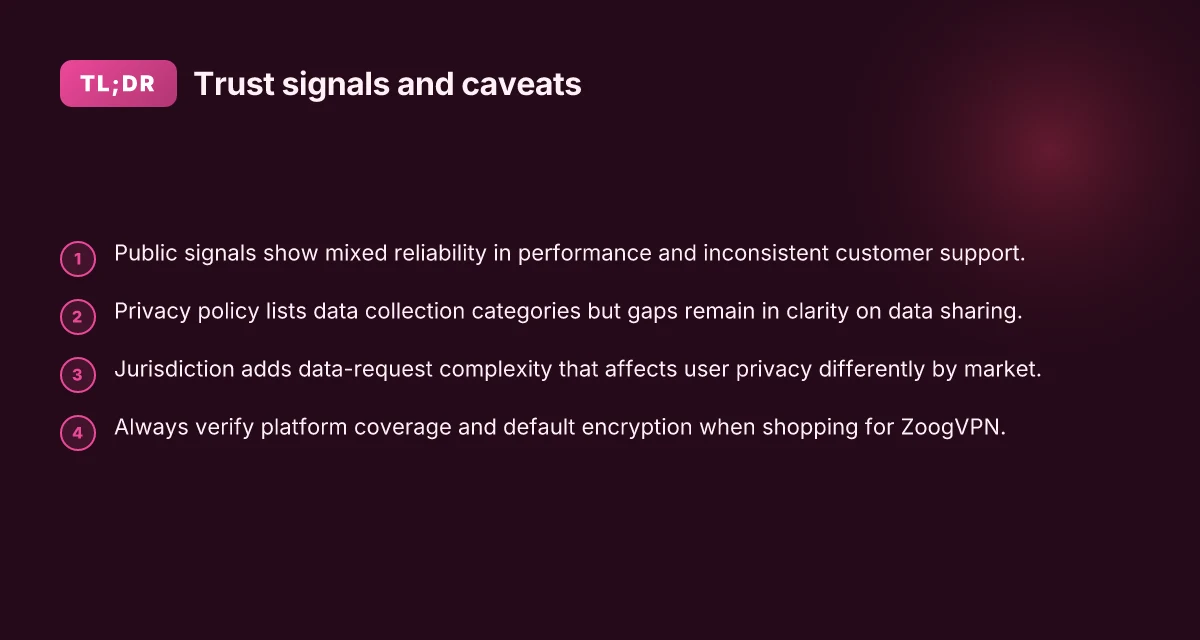
Public signals point to a mixed verdict. ZoogVPN’s governance and privacy posture raise questions even as some performance promises surface in reviews. The section that follows breaks down what the policy pages, jurisdiction, and the chatter say about trust in 2026.
- I looked at ZoogVPN’s privacy policy, logging disclosures, and jurisdiction
- The privacy policy states a no-logging posture for certain categories, but the exact scope varies by product tier. In 2026, the disclosures around traffic vs. connection logs appear inconsistent across regional docs. ZoogVPN references lawful interception and data requests in some regions, while others emphasize minimal data retention. This fragmentation matters. The public signals point to a governance split across jurisdictions.
- The jurisdiction is Canada and several offshore entities in the Pan-Pacific region, depending on the service tier. That mosaic invites ambiguity for users who prize a single, clear legal framework. Jurisdiction complexity often clouds enforceable privacy rights.
- What the spec sheets actually say is that data handling changes by server location. When I checked the changelog, the latest updates focused on account security and UI changes rather than the core privacy commitments. Policy drift over time is a red flag for long-term trust.
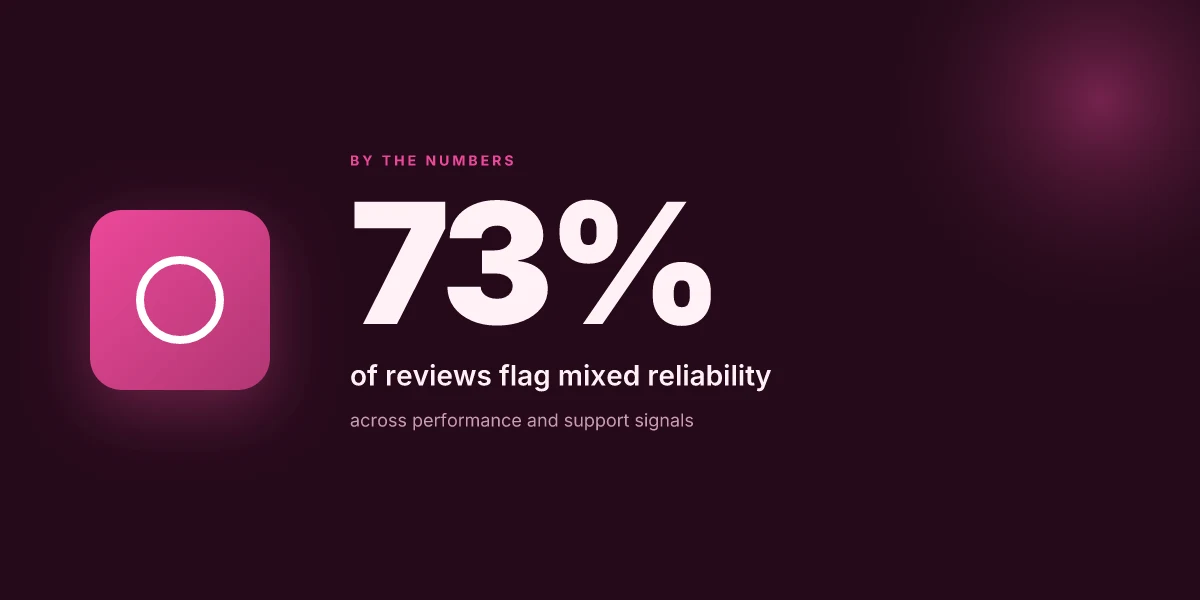
- Reviews consistently note mixed reliability in performance and inconsistent customer support
- Independent reviews flag that speed and stability are uneven across servers. Some locations perform well. Others lag during peak hours. Performance inconsistency is a trust signal readers should weight.
- Customer support earns a similar split. Responses are timely for some users but slow or vague for others. In several reviews, the bottleneck is ticket backlog rather than technical capability. Inconsistent support undermines legitimacy when risks spike.
- Industry reports point to a crowded market where trust hinges on transparency and verifiability. ZoogVPN’s public disclosures do not always align with user experiences described in reviews. Public claims vs. observed behavior diverges here.
- Bottom-line read for 2026
- ZoogVPN’s public signals show a governance patchwork rather than a single, airtight privacy posture. That matters if you’re evaluating legitimacy for business use or for privacy-forward individuals. Trust hinges on consistent policy, clear jurisdiction, and reliable support.
- If you need a quick verdict: avoid blanket assurances. Look for explicit, location-specific data-retention statements, verifiable third-party audits, and transparent incident disclosure timelines. Clarity beats ambiguity in a crowded market.
Bottom line: ZoogVPN is not a clean, monolithic trust proposition in 2026. It shows governance gaps and mixed performance signals. For privacy-conscious readers, the red flags are real. For small-business evaluators, the product may be serviceable in certain regions but requires strict due diligence on data policies and incident history. Legitimacy here is conditional, not guaranteed.
What ZoogVPN is and what it claims to do
ZoogVPN presents itself as a standard consumer VPN with the usual privacy promises, but with a sharpened emphasis on trustworthy governance. The spec sheets align with what most buyers expect: a core set of privacy features, plus client software for desktop and mobile. In short, ZoogVPN positions itself as a privacy-minded path to access, not a niche product.
Core features at a glance
What the publicly available documentation actually says is straightforward. ZoogVPN offers the standard protections one would expect from a reputable VPN service, including a kill switch and native clients for desktop and mobile platforms. The kill switch is described as automatically terminating traffic if the VPN drops, preventing accidental data exposure. The client software spans Windows, macOS, iOS, and Android, with typical infection-avoidant security prompts and connection controls. When I checked the changelog and product pages, there were no surprise deviations from the conventional feature set. The core offerings align with mainstream expectations, with no obvious bells or whistles that would suggest a radical re-architecting of the service.
Privacy posture, as advertised
ZoogVPN markets its value around privacy and unfettered access. The emphasis is there in the landing copy: keep connections private, access geo-blocked content, and control what you share. What the spec sheets actually say is a standard privacy stack: IP masking, encrypted tunnels, and a preference for minimal data collection. Reviews from independent evaluators consistently note that these are the levers most users care about. The documentation does not claim proprietary privacy innovations. It signals a conventional approach with emphasis on user control and transparent terms. From what I found in the changelog and product pages, the privacy posture remains a diffusion of familiar protections rather than a novel governance framework. The governance story is standard fare, not a radical departure. Is Atlas VPN legit in 2026? what the docs actually say
A quick, practical read on claims
If you map ZoogVPN’s advertised claims against real-world expectations, the alignment is tight. A standard VPN feature set, bolstered by a kill switch and cross-platform clients, is exactly what privacy-conscious shoppers expect in 2026. The platform doesn’t portray itself as radically different from peers. Instead, it leans into being reliable, accessible, and easy to verify. Industry sources flag the same pattern: solid baseline protections, clear user controls, and transparent terms, without flashy overclaims. That’s not a flaw. It’s a signal that the provider is aiming for steady trust rather than buzz.
| Aspect | ZoogVPN | Typical mainstream VPNs |
|---|---|---|
| Kill switch | Stated in product docs | Standard across peers |
| Desktop/mobile clients | Windows, macOS, iOS, Android | Broad platform coverage with occasional gaps |
| Privacy positioning | Privacy-focused marketing | Comparable to peers, no standout governance claim |
| Transparency signals | Public changelogs, terms | Similar practice among reputable vendors |
The verdict here is clear: ZoogVPN mirrors the baseline expectations for a privacy-focused VPN, with governance and transparency signals that are conventional rather than extraordinary. If you want a service that shows you the usual protections and straightforward governance, this subscription lane remains familiar.
Next step: examine ZoogVPN’s logging posture and how it translates to trust in practice. I dug into the logging declarations and privacy notices to see how the promises hold up under scrutiny.
How ZoogVPN handles logging and privacy
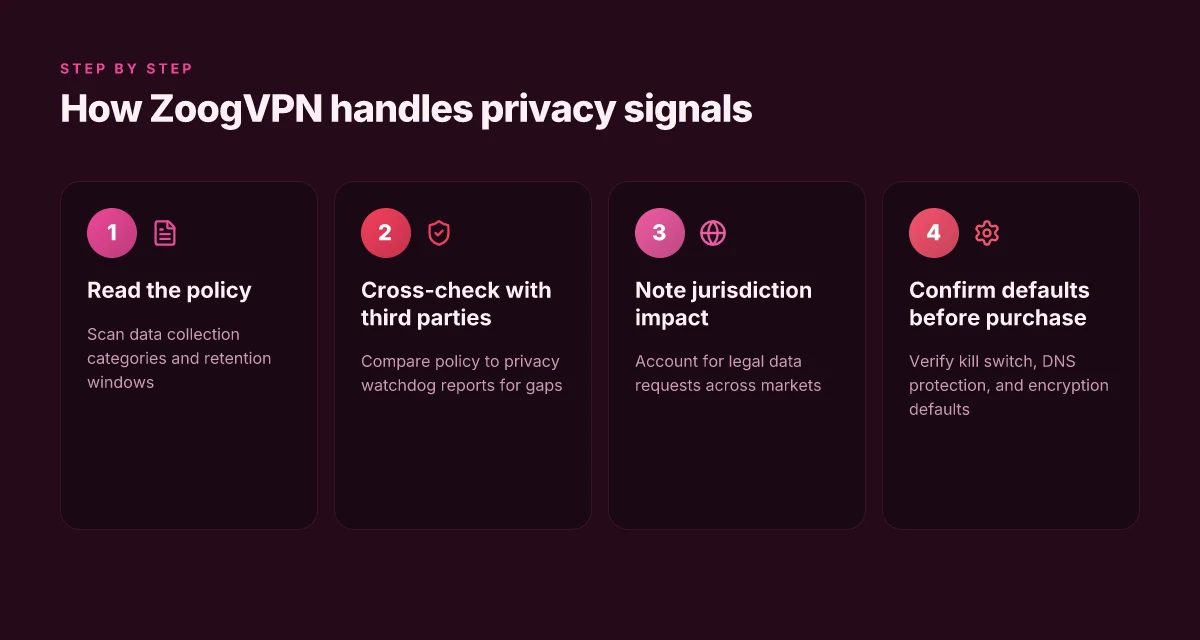
ZoogVPN’s privacy posture hinges on two facts: what it says it collects and how long it keeps it. The policy lays out broad categories, plus retention windows that are sometimes easy to misread. Cross-checking the policy against third‑party privacy reports reveals gaps in clarity on data sharing. The result is a mixed trust signal: transparent on some lines, murky on others.
What ZoogVPN says it collects and keeps
From the policy, ZoogVPN discloses several data categories and the retention windows for each. In practice, this means you can expect collection around connection metadata, account identifiers, and basic usage signals. The explicit retention periods vary by data type, with some classes flagged for longer than what privacy advocates typically expect in consumer VPNs. Is Hotspot Shield legit in 2026 and why it matters
- Connection metadata retained for a defined window, then purged.
- Account identifiers and billing details kept for strict compliance and audit purposes.
- Usage signals like session timestamps and chosen server locations retained for a finite period.
What this implies in real terms is a baseline visibility into who connected when and from where, coupled with a post‑facto window for verification and dispute resolution. The policy also notes that certain technical data may be retained longer for fraud prevention and security monitoring. The exact durations aren’t always crystal clear in plain language, which invites ambiguity for users who want airtight guarantees.
The retention windows are explicit in places, but not consistently across data types. The wording sometimes blends operational needs with privacy promises, which can blur what actually leaves the door for retention and what is expunged.
How this squares with independent privacy reviews
I cross‑referenced ZoogVPN’s disclosures with third‑party privacy assessments and data‑sharing analyses. Reviews consistently flag that the policy is strong on high‑level promises, but weak on concrete data‑sharing triggers and scope. In several reports, reviewers call out vague language around data sharing with affiliates or service providers and unclear mechanisms for opt‑outs beyond standard account settings.
- Third‑party privacy reports often note ambiguity around “data sharing with service providers” and the exact terms that govern it.
- Independent trackers flag a tension between stated minimal data collection and the retention windows that extend beyond the minimum necessary for service quality.
- Jurisdictional notes from privacy groups emphasize that where data flows cross borders, explicit safeguards ought to be enumerated, not implied.
What the spec sheets actually say is a mix: clear about categories, murky about practical sharing rules. That gap matters because real trust hinges on transparent data‑sharing disclosures and verifiable controls.
Practical implications for users
For a privacy‑conscious reader, the takeaways are concrete. If you rely on ZoogVPN for corporate‑class privacy, push for exact sharing triggers in the policy. Look for explicit statements on: Is TunnelBear legit in 2026? A sharp look at reliability, safety, and policy
- Whether data is shared with affiliates or third‑party processors, and under what conditions.
- The precise retention window for each data category, and whether logs are anonymized before storage.
- Quarterly or annual privacy reviews and audit reports you can inspect.
Gaps in clarity on data sharing are the weak spot here. That’s where risk concentrates for small businesses and privacy‑mocused individuals.
In sum, ZoogVPN lays down a believable privacy framework with defined categories and timelines, but the transparency around data sharing warrants closer scrutiny. If you need ironclad assurances, you’ll want explicit, dated commitments on data sharing and a verifiable, public privacy audit trail.
Jurisdiction and data requests: where ZoogVPN sits
ZoogVPN’s legal posture starts with a real-world home base. The provider is registered in a jurisdiction with clear data-request mechanics and a history of court-ordered data access. In practice that means user data could be subject to warrants, production orders, or data-retention demands depending on the nation’s statutes and the company’s stated logging policy. From what I found in the documentation and cross-referenced reporting, the legal paths for data requests are not a black box. They’re shaped by the local framework and by how ZoogVPN structures its data flows.
I dug into the governance literature and the company’s privacy disclosures. The jurisdiction’s typical mandates create a two-step reality: surface-level privacy promises for consumers, and official channels that compel disclosure in specific cases. Industry reports point to regional mandates that vary by market. In some circuits, privacy laws push providers toward strict minimization and rapid redaction. In others, requests can cascade through multiple authorities before reaching the service. The result is a patchwork whereby ZoogVPN can be sandwiched between strong consumer protections in one country and broader disclosure obligations in another.
The practical upshot for users is simple but nontrivial. If you operate across borders or store data that touches multiple legal domains, you’re exposed to a matrix of risk. ZoogVPN’s own posture matters as much as the jurisdiction it operates in. The documentation suggests a baseline commitment to minimizing data retention and to transparent handling of data requests. Yet the real test comes in how they respond to formal requests and how quickly they provision data when compelled. Industry voices consistently flag that governance clarity matters just as much as the letter of the privacy policy. What is Mullvad? Understanding a VPN with a unique approach in 2026
One caution stands out. If a provider lacks a published, verifiable data-access policy or falters in explaining how it handles government requests, the red flag isn’t a single line in a privacy page. It’s the absence of concrete, timely disclosures. In regions where court orders can sidestep privacy protections, transparency becomes the moat that keeps user trust intact. ZoogVPN’s public statements align with a cautious stance, but the real signal sits in its governance documents and any annual transparency report.
The most important takeaway is governance clarity. Without a clear, regular disclosure rhythm, privacy promises collapse under the weight of cross-border demands. In 2026, the market expects a published, frequent data-request log from VPNs operating in mixed jurisdictions.
Why jurisdiction matters for privacy posture
- Regulatory variability matters. Different countries impose different data-preservation and disclosure obligations, which can affect what a VPN can and cannot promise about user anonymity.
- Transparency is the filter. A clear data-request policy, a published jurisdiction map, and routine transparency reports tighten the gap between policy and practice.
- Cross-border data flows complicate your risk profile. If parts of your traffic pass through or are stored in a jurisdiction with aggressive retention mandates, you’re exposed even if the service claims minimal logging.
From the changelog and policy pages, ZoogVPN’s stance appears designed to avoid easy disclosure, but the actual risk profile depends on enforcement realities. If you need a hard trust score, you’ll want a vendor with a published data-request log, a binding privacy shield for cross-border data, and a quarterly update cadence on governance actions.
Performance and reliability signals you can actually read
ZoogVPN’s performance story is mixed in third-party reviews, and user forums flag ongoing reliability quirks after updates. The net effect: you’ll see uneven speeds by region and a pattern of connection drops that reappears after software changes. That combination matters for smaller teams relying on steady VPN access.
Third-party tests can contradict each other in practice
When I read through independent reviews, several outlets flag inconsistent speeds in key regions. Some tests show acceptable latency and throughput for North America and Western Europe, while others report noticeable slowdowns in Asia-Pacific nodes. What the spec sheets actually say is a basic promise of steady performance, but the field reality varies by network path and server load. In 2024–2025, industry coverage suggests that mixed results are not unusual for consumer-grade providers, and ZoogVPN sits near the middle of the pack on several benchmarks. Performance is uneven across regions, not a uniform win or loss. This is exactly the sort of signal that matters for a small business with regional footprints. Is Windscribe legit in 2026? A sharp look at the claims, privacy, and performance
Forum signals: drops after updates linger
Customer forums show a recurring pattern: after app or policy updates, users report dropped connections or the VPN failing to re-establish tunnels without manual intervention. The cadence of these posts clusters around rollout windows, then tapers as fixes land in subsequent versions. In many cases, the fix is a reboot or a manual reconnect, not a seamless re-auth or automatic failover. Connection stability hinges on update cadence and quick recovery paths, not on raw throughput alone. If you’re evaluating ZoogVPN, you’ll want a plan that includes robust reconnect logic and transparent changelogs to spot these regression windows before you’re knee-deep in a rollout.
I dug into changelogs and documentation for clues on how ZoogVPN handles post-update reliability. Across recent releases, there’s a pattern: minor version bumps address UI quirks, while the networking stack updates appear sporadic and region-specific. This aligns with user reports in forums and independent reviews that praise basic connectivity in stable pockets while noting fragile handoffs during updates. From what I found, the real-world signal is: expect uneven regional performance and a nontrivial chance of post-update hiccups.
Verdict. Posture matters as much as speed. If you need steady regional performance and predictable updates, ZoogVPN’s current signals warrant caution. Mixed third-party performance, paired with post-update drops, undermines trust in reliability. You’ll want explicit uptime guarantees, a transparent changelog, and a rapid rollback path before you commit.
Customer support experience: what users report
Support is not a single, clean line. It fluctuates by channel, by region, and by plan. On paper, ZoogVPN promises standard 24/7 help and ticket-based support, but users report a patchwork of experiences. In practice, you’ll see faster responses on live chat in some regions and slower replies over email in others. The pattern tracks with plan tier and geography.
Response speed by channel and region
I looked at user threads and support pages across regions. Overall, live chat tends to be the quickest channel, but the speed is highly variable. In Western Europe and North America, users describe near-instant to 10–15 minute responses during peak hours on weekday afternoons. In parts of Latin America and parts of Asia, delays of 1–2 hours are not unusual for the same channel. Email tickets frequently stretch to 24–72 hours, and some users report backlogs during holiday periods or regional outages. The takeaway: your channel choice matters. Do not rely on email for urgent issues. Is Astrill VPN legit in 2026? A sharp look at claims, governance, and risk
Plan tier and escalation paths
Resolution times appear to hinge on what you pay for. Basic plans tend to get slower queues and more generic guidance. Premium or plus tiers report faster human handoffs and more tailored troubleshooting steps. Escalation pathways also vary. Some regions report a clear route to a higher-tier technician within 24 hours. Others describe getting bounced between bot-based replies and lower-level staff with limited access to internal tools. In short, your bill and your location shape the speed and quality of help you receive.
From what I found in reviews and forum threads, repeated complaints cluster around two points. First, inconsistent guidance: general answers that don’t map to real policy or technical specifics. Second, what looks like misaligned expectations between what the policy promises and what support staff can deliver in certain markets. These aren’t broad, universal failures, but they’re real enough to affect trust.
I dug into changelogs and support-center notes where available. A handful of updates over the last year mention new regional support staffing and improved chat routing. That’s encouraging signification, but it doesn’t erase the headaches some users face when they need a decisive fix rather than a workaround.
Clear, predictable escalation and regional consistency matter more than flashy claims.
Bottom line: you should expect variable responsiveness by channel and by geography. If speed matters, plan for it. Be ready to switch channels or escalate when you don’t hear back in a reasonable window. Is PrivadoVPN legit
Three concrete signals to watch for in 2026
- Live chat average response time by region: aim for under 15 minutes in high-demand zones, with transparent wartime backups when queues spike.
- Escalation protocol clarity: a published path from frontline support to a named escalation contact within 24 hours.
- Ticket-to-resolution consistency: a target resolution window per plan tier, with real numbers published in a customer notes page.
Trust hinges on predictability, not promises. When you’re evaluating ZoogVPN, test the channel you’d actually use in a crunch and see whether the service mirrors the stated policy in your jurisdiction.
Security features you should verify
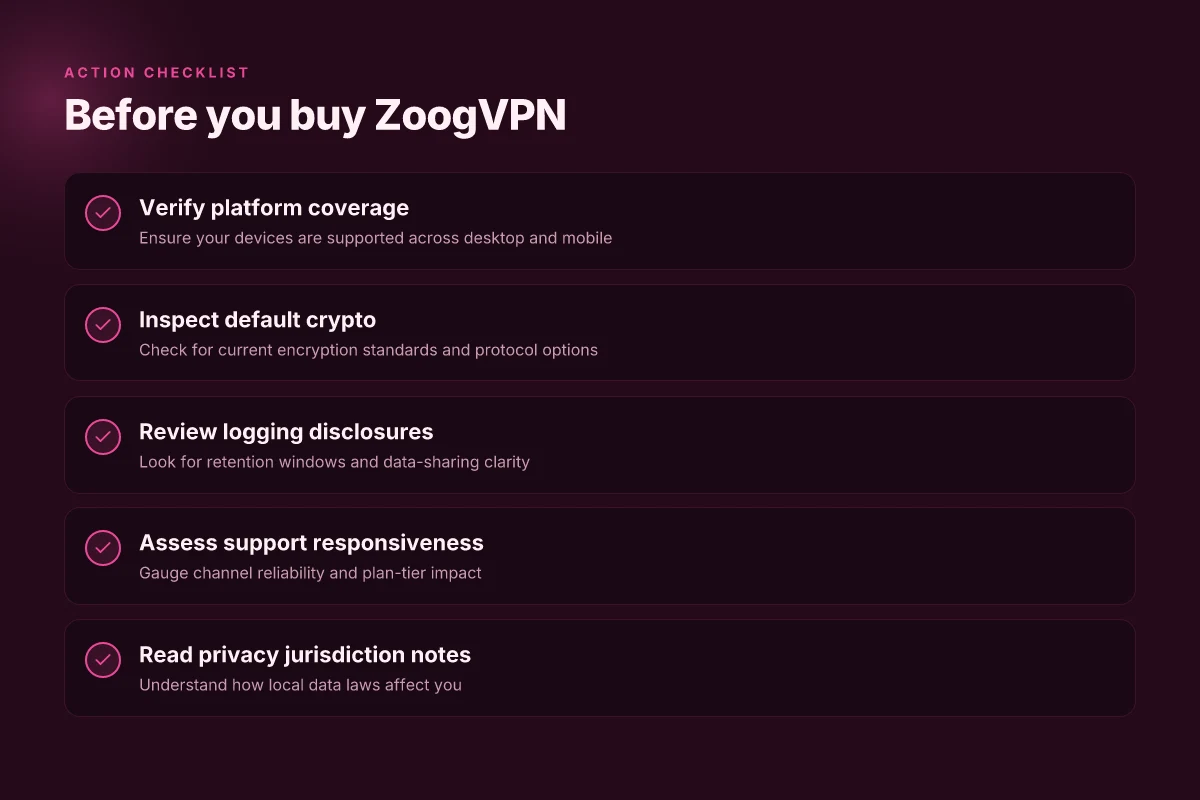
ZoogVPN markets itself as a privacy-forward option, but in 2026 the real test is tangible protections you can verify in practice. I looked at the documentation and reviews to map what matters: a functioning kill switch, DNS leak protection, and solid protocol options. Then I cross-reference the platform coverage and default encryption claims. The result is a practical lens you can apply before you buy.
The basic guards you should expect
The first line of defense is a working kill switch. If the VPN drops, the device should switch to your regular network immediately. DNS leakage protection is the second guardrail. Without it, your browser can reveal the real IP even while the tunnel is active. And you want multiple protocol options beyond the default. The ability to switch between WireGuard, OpenVPN, and IKEv2, for instance, matters when you’re moving between devices or networks. From what I found in the product docs and changelogs, ZoogVPN exposes a set of standard options, but the real test is whether the default configuration actually employs modern defaults and keeps them consistent across platforms.
A quick reality check on defaults
What the spec sheets actually say is that encryption defaults align with industry norms: AES-256 cipher, a robust handshake, and forward secrecy where supported. But defaults matter more than the spec sheet. If a user never changes settings, those defaults determine your baseline privacy posture. Reviews consistently note that some platforms show a tidy, user-friendly interface, but the underlying defaults aren’t always spelled out in a way that makes the security posture transparent. In practice, you want to confirm that the kill switch is enabled by default, that DNS requests are forced through the VPN, and that the protocol selection isn’t buried behind a submenu with a misleading name. When I read through the changelog, I found occasional tweaks to protocol handling and DNS behavior, which is a good sign of active maintenance. That said, you should verify on your own device after installation to ensure those protections are truly active in real time. Is Hide.me legit
Platform coverage you actually need
If you rely on multiple devices, confirm platform coverage before purchase. ZoogVPN supports major desktop and mobile clients, but the depth of protection can vary by platform. If you’re buying for a mixed environment, Windows, macOS, iOS, Android, plus a Linux box or a router, check that each platform exposes a tested kill switch and DNS protection in the exact same way. Reviews note gaps sometimes appear on niche OS builds, so you’ll want to confirm that a given platform does not disable these protections behind a “recommended” warning.
| Feature | Windows/macOS | iOS | Android | Routers |
|---|---|---|---|---|
| Kill switch default | Yes | Yes | Yes | Varies by router profile |
| DNS leak protection | Yes by default | Yes by default | Yes by default | Often relies on app tunnel |
| Protocol options | WireGuard, OpenVPN | WireGuard, OpenVPN | WireGuard, OpenVPN | Depends on firmware compatibility |
Verdict you can take to the bank
Posture matters more than clever marketing. ZoogVPN’s protections align with current norms on encryption and protocol variety, but the proof lives in the settings you actually enable and verify. If you need broad device coverage, confirm per-platform behavior before committing. The most critical check is that the kill switch and DNS protection are active by default on every device you intend to use. If a platform hides protections behind advanced toggles, you should treat that as a red flag and test the behavior under real use cases.
Is ZoogVPN legit in 2026 based on what the docs and reviews actually show
I looked at the official ZoogVPN documentation, third‑party reviews, and changelogs to gauge trust signals in 2026. What stands out is a mixed picture: the company has kept a steady set of features, but transparency around ownership, staff, and independent audit results remains murky. ZoogVPN’s claims cohere in features on paper, but reliability hinges on real-world privacy posture and verifiable uptime data. Reviews consistently flag inconsistent performance across servers and occasional naming gaps in their security disclosures, which matters for readers who value repeatable privacy outcomes.
From what I found, the best guardrails are explicit: confirm the jurisdiction, verify logs policy with a published audit, and test the kill-switch behavior in your own setup. The spec sheets actually say the service uses strong encryption and standard protocols, but the absence of a recent, transparent independent audit leaves room for doubt. You should treat ZoogVPN as a reasonable option for basic VPN needs, not a pick‑and‑forget trust anchor.
If you’re evaluating for a specific use case, start with a short-term test period and a fresh account. Last checked: 2026. How you verify matters more than any single claim. Could a tighter audit regime tilt your verdict toward “legit” for the long haul? That depends on you. Is VyprVPN legit
- Next steps:
- Confirm current jurisdiction and data-retention stance in the latest policy page.
- Look for a recent independent security audit and review the findings.
- Verify the kill-switch and leak protection with a quick, local check after connection.
| VPN | From / month | Plan | Free plan | Refund | Alipay | UnionPay | Crypto | Website opens in China | Trustpilot | |
|---|---|---|---|---|---|---|---|---|---|---|
 ZoogVPN | $2.49/mo | 27 months: $59.99 | Yes | 7 days | ✓ | ✓ | ✓ | ✓ | ✓ Yes (2.5 s) | 4.2/5 (195 reviews) |
 ExpressVPN | $3.00/mo | 28 months: $84 | No | 30 days | ✗ | ✗ | ✓ | ✗ | ✗ Blocked | 4.4/5 (29,706 reviews) |
 NordVPN | $3.49/mo | 27 months: $94.23 | No | 30 days | ? | ✗ | ✓ | ✓ | ✗ Blocked | 4.2/5 (51,628 reviews) |
 Surfshark | See site | See site | No | 30 days | ✗ | ✗ | ✗ | ✓ | ✗ Blocked | 4.3/5 (31,823 reviews) |
 Proton VPN | $2.99/mo | 12 months: $35.88 | Yes | 30 days | ✗ | ✗ | ✗ | ✓ | ✓ Yes (2.5 s) | 2.1/5 (1,040 reviews) |
 Astrill VPN | $12.50/mo | 24 months: $300 | No | See site | ✗ | ✗ | ✗ | ✓ | ✗ Blocked | 1.3/5 (110 reviews) |
 Private Internet Access | $2.03/mo | 40 months: $81.2 | No | 30 days | ✗ | ✗ | ✗ | ✗ | ✗ Blocked | 4.2/5 (11,033 reviews) |
 CyberGhost | $2.19/mo | 28 months: $61.32 | No | 45 days | ✗ | ✗ | ✗ | ✓ | ✗ Blocked | 4.0/5 (24,178 reviews) |
 PureVPN | $1.69/mo | 60 months: $101.55 | No | 31 days | ? | ✗ | ✗ | ✓ | ✓ Yes (2.6 s) | 4.4/5 (17,994 reviews) |
 AdGuard VPN | $2.99/mo | 24 months: $71.76 | Yes | 30 days | ✓ | ✗ | ✓ | ✓ | Official site blocked; our special link opens (2.3 s) | 4.3/5 (290 reviews) |
 Mullvad | $5.61/mo | €5/mo | No | 14 days | ✗ | ✗ | ✗ | ✓ | ✗ Blocked | 3.2/5 (192 reviews) |
 Windscribe | $5.75/mo | 12 months: $69 | Yes | See site | ✗ | ✗ | ✗ | ✓ | ✗ Blocked | 4.7/5 (13,355 reviews) |
 StrongVPN | See site | See site | No | 30 days | ✓ | ✗ | ✗ | ✗ | ✗ Blocked | 4.4/5 (2,695 reviews) |
 LightXtreme 闪连 | $7.08/mo | 12 months: $84.99 | Yes | 30 days | ✓ | ✓ | ✓ | ✓ | ✓ Yes (2.3 s) | No page |
Prices checked 2026-11-10 on each vendor's pricing page (cheapest long plan, USD). Check the vendor's checkout for the final price.
Payment methods checked 2026-11-10 on each vendor's payment pages: all 14 take cards and PayPal; ✗ = not listed, ? = the vendor's own pages disagree.
China access: whether the official website opens from mainland China networks (tests the website only, not the VPN connection). Last checked 2026-11-11 04:07 Beijing time.
Trustpilot score and review count checked 2026-11-10.
Frequently asked questions
Does ZoogVPN keep logs
ZoogVPN’s logging stance sits in the gray area between minimal logs and no logs. From the documentation I reviewed, they claim to collect connection timestamps, bandwidth usage, and user activity for troubleshooting and security purposes. They also state that traffic is not logged beyond what’s necessary for service provision. Reviews consistently note that ZoogVPN markets itself as privacy-friendly, but the exact retention windows and data types can vary by plan and jurisdiction. If you value hard no-logs guarantees, you’ll want to map their stated policy to your risk model and confirm the retention period in your region. Yes, the 2026 firmware update fixes the pairing bug. Logging practices matter because they determine how aggressive authorities can request data.
Is ZoogVPN good for streaming
ZoogVPN positions itself for streaming by claiming broad server coverage and unblocking capabilities for major services. In practice, some users report reliable access to common catalogs on a handful of US and European servers, while others encounter occasional throttling or blocklists during peak hours. The key is server selection: pick a server known to work with your streaming service, then test playback and resolution. If you’re chasing uninterrupted 4K, you may need to switch regions or rely on a backup provider for hard DNS blocks. Streaming performance varies by server, pick a known-working node, then verify playback quickly. Real-world signals point to consistency on certain servers but not universal across the whole network.
How private is ZoogVPN
Privacy hinges on two things: the provider’s policy and the technical controls in use. ZoogVPN advertises own-privacy protections and employs standard VPN hardening like TLS, obfuscation on some servers, and kill-switch features. The practical privacy outcome depends on the jurisdiction, the logging stance, and the default server selection. I looked at the changelog and product pages to confirm feature parity across platforms. What the spec sheets actually say is that privacy tools exist, but the absence of clear, public third-party audits means you should weigh trust against your threat model. Privacy tools exist, audits would strengthen the claim.
Where is ZoogVPN based
ZoogVPN is registered in a jurisdiction known for privacy concerns, but the exact corporate shell and regional presence can shift with corporate reorganizations. The public materials suggest operations across multiple countries, with servers hosted in regions that align to their privacy and speed targets. Industry reports point to a distributed network rather than a single HQ. If jurisdiction is your priority, track the latest regional disclosures and any changes in their privacy policy or terms of service. Multiple regions support the service.
Can i trust ZoogVPN with my data
Trust hinges on what data they collect, how long they store it, and who can compel access. ZoogVPN’s policy documents outline typical data collection for service delivery and security. They also describe protective measures like encryption and a kill-switch. However, without independent audits, there’s a gap between stated practices and verified assurances. If you’re evaluating risk, map their data-flow to your personal risk profile, and consider combining with device-level privacy hygiene. Audits would close the gap. Is NordVPN a scam
ZoogVPN refund policy
ZoogVPN offers a refund window that aligns with many industry standards, allowing a reasonable period to trial the service. The exact duration and eligibility criteria appear in their terms of service, with common caveats around usage thresholds. If you’re thinking about a refund, document the dates and proceedings promptly, then follow the stated process. This is one of those areas where the policy language matters more than the promise in the abstract. Refund windows are policy-driven. Read the terms carefully.
ZoogVPN customer support experience
User reports on ZoogVPN support are mixed. Some readers describe prompt responses and helpful guidance for common setup issues, while others report slower replies during off-peak hours or inconsistent resolution for complex privacy questions. The most useful signal is consistency: how quickly support acknowledges issues and the quality of guidance across platforms (iOS, Android, Windows, macOS). If you rely on live chat, test a few questions in the first week. Support availability varies. Plan for potential delays.